Freniere plantation
Interview with the VampireFreniere plantation is a major plantation estate upriver from New Orleans, associated with the Freniere family’s wealth, dependence, and vulnerability. Its apparent magnificence rests on an unstable sugar economy, while its household becomes the setting for Louis’s moral opposition to Lestat’s appetite for human life. The plantation therefore links family succession, debt, marriage, enslaved labor, and vampire predation in one concentrated social landscape.
Setting and Economic Structure
Freniere plantation is described as a magnificent spread of land that hoped to make a fortune in sugar soon after the refining process had been invented in Louisiana. Its prosperity is not secure: the family’s splendor depends on repeatedly mortgaging the next year’s crop, so the estate’s future rests precariously on continued production and favorable finances. The sugar itself carries an irony for Louis, who associates refined sugar with the essence of New Orleans life—richly enticing, yet potentially poisonous, and capable of causing other values to be forgotten.
The plantation’s material stability depends on the young Freniere man, who is expected to manage the estate, negotiate marriages, arrange dowries, bargain with the outside world, and preserve the family’s position. His five sisters, although intelligent, have not been educated to administer the plantation or understand its financial condition. Their dependence is therefore both emotional and economic: they love their brother intensely, but their lives and the estate’s survival are tied to his continued existence.
The Duel and Lestat’s Predation
Lestat selects the young Freniere as a desired victim, treating the family’s crisis as an opportunity for a particularly valuable kill. The young man has become involved in a duel after insulting a young Spanish Creole at a ball. The quarrel is socially unavoidable rather than practically meaningful, but the appointed combat threatens the entire household because the young Freniere is the only person capable of carrying its economic and familial responsibilities.
On the night before the duel, the young man locks himself in his father’s study and makes a will. He understands that his death under the rapier at four in the morning could bring down the plantation and leave his sisters without protection. When he rides toward New Orleans at midnight, he does so with the courage of someone who sees only one path and has resolved to follow it. Louis recognizes in his face a depth of feeling and wisdom absent from Lestat’s usual victims, and he attempts to prevent Lestat from killing him before the duel.
Louis and Lestat pursue the young man on horseback toward the swamp beyond New Orleans’s northern gate. The duel is fought in bitter winter cold and driving rain, conditions that conceal Lestat’s movements and place the young Freniere at special risk. Louis insists that the young man be allowed his chance, but Lestat attacks him. Louis tries to pull Lestat away and is struck with such speed that he does not perceive the blow until he finds himself in the water; by the time he recovers, the young Freniere is dead, sprawled across the roots of a cypress with his boots submerged in the marsh. His body slips beneath the water, while Lestat celebrates the kill and threatens Louis with revenge.
The Freniere Household After the Death
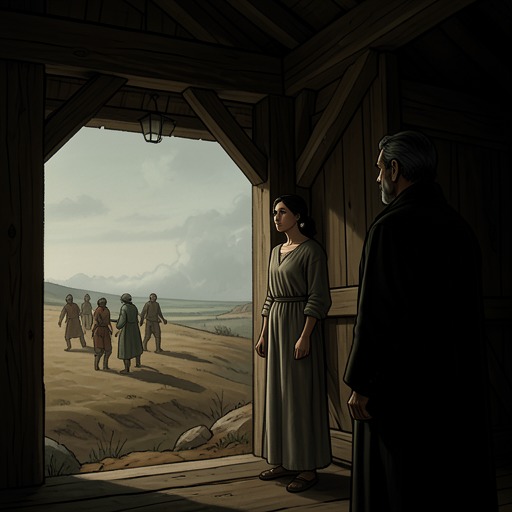
Near dawn, Louis reaches Freniere plantation and sees the five sisters gathered in the parlor without having dressed for bed. Their candles are burning low, and their black clothing and raven hair make them appear like mourning apparitions. The sisters are waiting for news, already inhabiting the posture of mourners. Babette alone appears resolute, as though she has begun to accept the impossible burden of taking responsibility for the plantation.
Louis reveals himself indirectly by allowing candlelight to strike his reflective face at a window and then seeming to vanish. Babette, unlike the others, refuses to dismiss what she has seen as imagination or a ghost. Louis speaks to her and tells her that her brother is dead, urging her not to surrender her life to a small existence or to let other people turn her future into a sacrifice. He tells her to take control of her own life, and his visitation becomes a source of courage rather than merely a supernatural terror.
Babette subsequently chooses to run the plantation herself, becoming a scandal in the neighborhood because she assumes authority without a man in the household. She manages a substantial dowry for her younger sister and marries the following year. Her success restores her social prospects, but the estate remains a place of isolation as well as achievement: she can preserve its finances while suffering the social ostracism attached to her independence.
Louis, Babette, and the Plantation’s Refuge
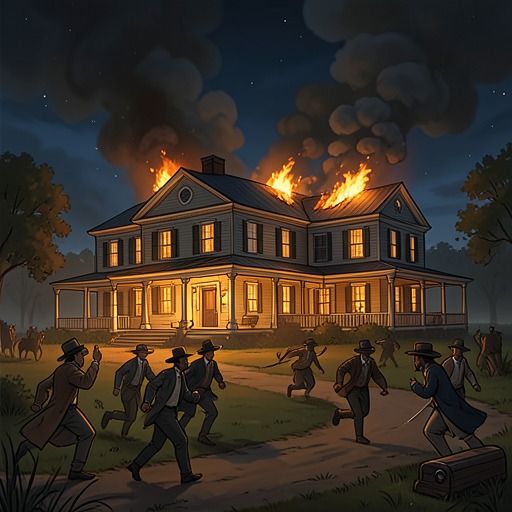
After Pointe du Lac is destroyed by fire, Louis brings his coffin to Freniere plantation with Lestat. He chooses the estate because Babette lives there with her young husband and because he has previously intervened in her life. The fire at Pointe du Lac is still visible against the sky, while the escaped enslaved people from that plantation are separated from the others at Freniere and their accounts are initially dismissed as foolishness. Babette understands that something dreadful has occurred, but she suspects murder rather than the supernatural.
Louis’s connection with Babette is marked by protection, distance, and concealed affection. He visits her without allowing her to see him, wanting to know that she is happy, and her happiness gives him happiness in return. He acknowledges that he feels love and that he felt a strong, though not supreme, form of love for Babette. Freniere plantation thus becomes a place where Louis’s detachment is tested by attachment: he does not simply observe Babette’s life but repeatedly acts to defend her capacity to continue it.
Enslaved Labor and Narrative Significance
Freniere plantation belongs to the same plantation economy that sustains Louis and Lestat’s hidden existence. Louis explains that his own plantation’s productive work had become less important than its function as a cover, while money acquired through Lestat’s theft and gambling was invested in land, apartments, and town houses. The wealth surrounding these estates is therefore inseparable from systems of ownership, labor, inheritance, and concealment.
The plantation also stands in contrast to Pointe du Lac’s violent collapse. At Freniere, the family’s crisis is publicly managed through mourning, business, marriage, and social reputation; at Pointe du Lac, vampire violence produces fire, flight, and death. Yet the contrast does not erase the shared structure beneath both places. Each estate depends on hierarchy and controlled labor, and each turns private catastrophe into a problem of property and continuity.
As a setting, Freniere plantation gives the novel a material form for Louis’s ethical conflict. Lestat sees the young Freniere chiefly as prey, while Louis sees the family, the threatened estate, and the human future bound to them. The plantation’s sugar wealth, precarious debts, gendered succession, and enslaved labor make that conflict larger than a disagreement between two vampires: the estate reveals how violence, prosperity, family duty, and moral self-justification coexist within the same world.